


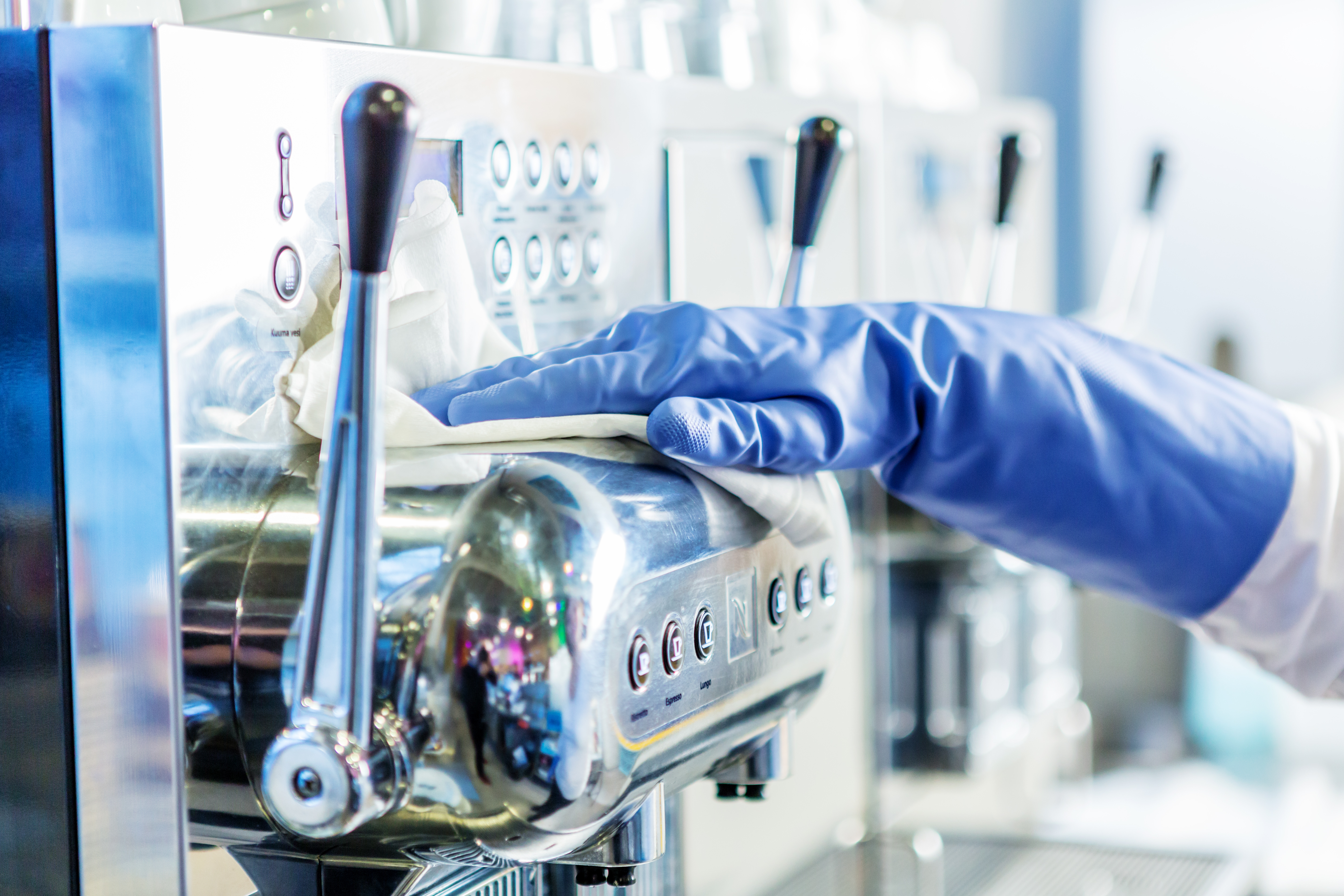
Surface disinfection is an important step in ensuring sanitary and hygienic conditions in various fields, whether healthcare facilities, food production or households.
Effective disinfection helps prevent the spread of infectious diseases and protect people's health. In this article we look at the main disinfection methods: mechanical cleaning, chemical disinfection, heat treatment, ultraviolet disinfection and the use of innovative technologies such as lactic acid-based products.
Mechanical cleaning
Mechanical cleaning involves removing dirt, dust and organic and inorganic soiling from a surface by physical means. This can be done using:
- Brushes, sponges and mops: brushes of varying stiffness are used to remove heavy soiling.
- Vacuum cleaners: removing dust and fine particles from hard-to-reach places.
- Cloths: wiping smooth surfaces to remove dust and light dirt.
The effectiveness of mechanical cleaning depends on how regularly the procedures are carried out and on the correct choice of tools for each type of surface.
Chemical disinfection
Chemical disinfection involves the use of various chemicals to kill microorganisms on a surface.
The main agents for chemical disinfection are:
- Chlorine-containing compounds: for example, sodium hypochlorite (bleach), which is effective against a broad spectrum of bacteria and viruses. Chlorine-based disinfectant Kloriitti Forte
- Alcohols: isopropyl alcohol or ethanol, which evaporate quickly and kill microorganisms by denaturing their proteins. Hand and surface disinfectant TRIOCLEAN PRO 0090 . Isopropanol-based disinfectant Ipa 300
- Quaternary ammonium compounds (QACs): effective against Gram-positive bacteria; used in combinations to broaden the spectrum of action. QAC-based disinfectant with a cleaning effect Antibact Forte
- Oxygen-based compounds: have antiseptic properties and are used in various concentrations. Peracetic acid-based disinfectant F 268 Airol S
To achieve the maximum effect, it is important to dose chemicals correctly and observe the required contact time of the solutions with the treated surface.
Heat treatment
Heat treatment involves the use of high temperatures to kill microbes. The main methods of thermal disinfection are:
- Steam cleaning: high-temperature steam (usually about 100°C) is used to treat surfaces. It effectively kills most bacteria, viruses and fungi.
- Hot water: hot water (above 70°C) combined with mechanical friction helps remove soiling and kill microorganisms.
Heat treatment is particularly effective in healthcare facilities for sterilising instruments.
Ultraviolet disinfection
Ultraviolet (UV) disinfection uses UV-C rays (wavelength 200–280 nm), which have a powerful antimicrobial effect. UV-C rays destroy the DNA of microbes, causing them to die. The advantages of UV disinfection include:
- Fast action
- No chemical residues
- Possibility of process automation
However, precautions must be taken when using UV disinfection units to avoid exposure of human skin and eyes.
Use of innovative technologies
As technology develops, new disinfection methods keep emerging.
Modern innovative technologies offer new opportunities for effective and safe surface disinfection. One such option is products based on lactic acid, which acts as a biocide.
Lactic acid has natural antimicrobial properties and is effective against a broad spectrum of pathogens: bacteria, viruses and fungi. For example, our products from the Nonsid range not only kill microorganisms effectively but are also environmentally safe and biodegradable. This makes them an ideal choice for use where environmental safety requirements are high, for example in the food industry or healthcare facilities.
Lactic acid-based products can be used on their own or in combination with other methods for maximum effectiveness.
Conclusion
Effective surface disinfection requires the use of different methods depending on the specific conditions and requirements of the facility being treated. Mechanical cleaning is the first step in removing visible soiling; chemical disinfection slows down or completely stops the growth of microorganisms; heat treatment provides reliable safety without the use of chemicals; ultraviolet irradiation effectively tackles a broad spectrum of pathogens; and innovative technologies such as the Nonsid product offer environmentally friendly solutions for modern needs.
Together, this set of methods ensures a high level of sanitary and hygienic safety both in the home and on an industrial scale.
Disinfectants for professional kitchensDisinfectants for the food industry